
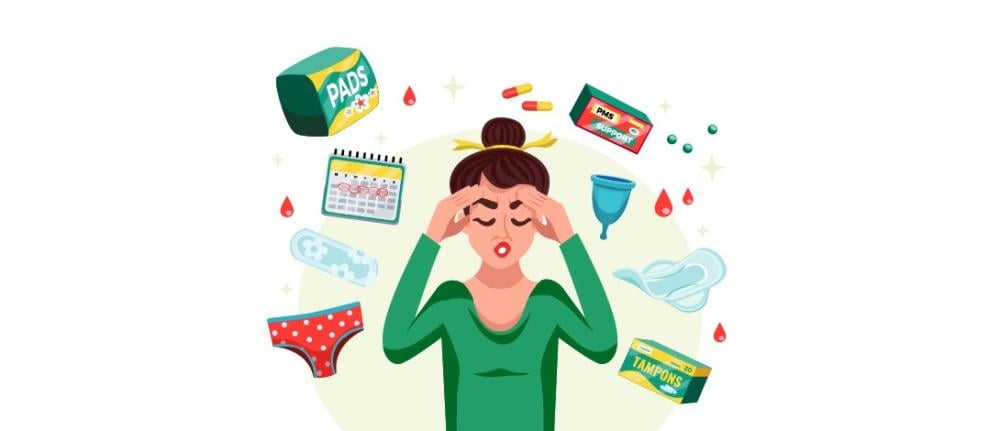
Premenstrual syndrome, or PMS, affects most women and is normal, but knowing the symptoms enables you to deal with them correctly. The symptoms, mood swings, and even the pains and cramps that result from the menstrual cycle are your body's way of alerting you to the approach of your period. The menstrual cycle is part of your femininity. We hope to share with you the journey of awareness to understand your femininity and deal well and accept all the changes that happen to you.
What are the causes of premenstrual syndrome (PMS)?
During this period leading up to menstruation, changes occur in hormone levels, which therefore affect you psychologically and physically.
During your 28-day menstrual cycle, the lining of the uterus forms and thickens to receive the embryo. Your uterus prepares for this every month, and when fertilization of the egg does not occur, hormone levels begin to decrease and the lining of the uterus begins to break down.
One of these hormones is called prostaglandin, which is responsible for the painful cramps and contractions that occur in the uterus when menstruation comes, in order to get rid of the uterine lining.
When do premenstrual symptoms begin?
PMS begins a week or two before your period. Symptoms become more intense, including discomfort, irritability, anxiety, unusual hunger, and cravings for sweets. You may also feel the urge to isolate yourself. These symptoms begin to disappear two days after your period starts and subside completely.
What are the symptoms of PMS?
You are certainly noticing the symptoms that appear on you every month during the premenstrual period, but we would like to tell you about them so that you know what is normal during this period and what is not normal so that you can deal with it well.
convulsions
Often, during the premenstrual period, the cramps are mild and occur at widely spaced intervals, but they are very normal. The cramps increase when menstrual blood comes out, indicating the arrival of the menstrual cycle.
- You can use warm compresses to relieve the pain.
- It is fine to use painkillers available at the pharmacy without a prescription that do not cause any harm during the period.
- Movement and exercise help to reduce the severity of the pain and help in the flow of menstrual blood.
- Don't forget to drink plenty of water to keep your body hydrated and reduce the severity of cramps.
- Drinks such as hibiscus, cinnamon, chamomile, and cloves may help you cope with this period. Avoid caffeine to reduce stress and not increase pain.
Headaches and back pain
Headaches and back pain are common and normal symptoms, there is no need to worry.
You can keep a painkiller in your bag during this period, taking care to take it according to medical instructions and at the time specified, not whenever you need it.
bloating or swelling
Bloating is normal as a result of hormonal changes, it will disappear soon. You feel that you have gained weight, but in reality, hormonal changes cause fluid retention and an increase in the amount of water in the body. This disappears as soon as menstrual blood comes out.
Mood changes
Certainly, mood swings are the most noticeable thing during this period: the urge to cry, extreme sensitivity to every word or action that happens around us, tension, nervousness, and impatience. You feel upset with the whole world. This happens because of the hormonal changes that occur during this period and affect mood. Deep breathing exercises help very well during this period.
spots or grains
Hormones are also to blame; hormonal changes cause pimples and spots to appear on your skin during the premenstrual period. Use a gentle skin cleanser.
vaginal discharge
White vaginal discharge is common before menstruation, due to increased blood flow to the uterus and vagina during this period.
breast pain
You feel discomfort from anything that touches the breast area, and you experience some hardening and pain. Hormonal changes also cause this. Wear sports bras while exercising, and avoid wearing tight bras when going out or while sleeping.
What should I do to deal with the symptoms of premenstrual syndrome?
Pay attention to what you feel before your period each month. Collect your own set of symptoms. It is not necessary to feel all the symptoms; you may feel only some of them, and you may feel symptoms that are not on the list we mentioned, but which recur with you every month. They are specific to you. Every body has its own way of telling you and alerting you to changes.
Here are some tips that can help you deal flexibly with your PMS period:
- Firstly, knowing the date of your menstrual cycle helps in predicting all the symptoms you experience during this period. This means that you will know the reason for the changes you are going through, which is the approach of your menstrual cycle. The Tahara app performs this role every month and reminds you of the approach of your menstrual cycle.
- During this period, make a point of eating balanced and healthy meals. A healthy menstrual cycle starts with proper nutrition.
- Practicing physical activities such as walking, running, and swimming helps improve your physical and mental health. Make exercise a basic routine in your life to maintain your overall health.
- Practicing deep breathing, yoga exercises, and relaxation exercises all help to relieve stress and mood disorders.
- Consult your doctor about taking vitamins and nutritional supplements, and make sure that you do not suffer from any vitamin and mineral deficiencies in your body. This deficiency causes many disorders, especially during the menstrual cycle.
- If the symptoms are very severe, including psychological disturbances and cramping pain, you should consult a doctor.