
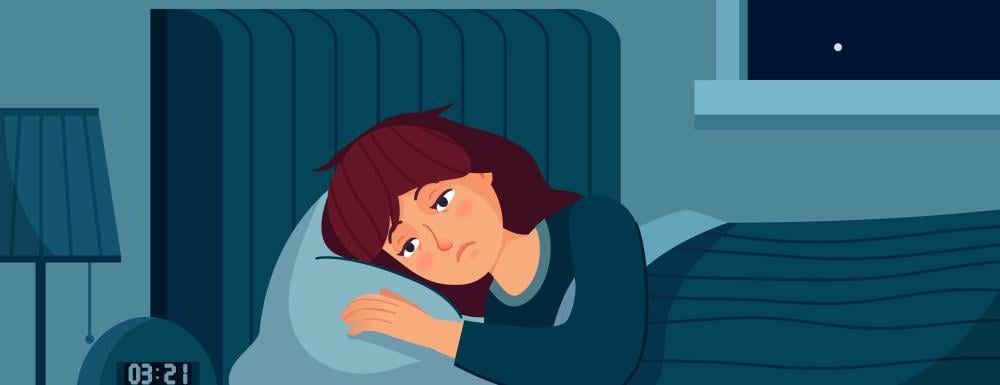
We need daily rest and relaxation to rejuvenate and prepare for the next day through sleep.
During the night, sleep is essential for human health in general and affects the performance and functions of the body.
However, many people suffer from sleep disorders, which include a variety of problems that affect your ability to sleep.
What is the importance of sleep?
Most scientists agree that sleep helps us do many things, including:
Detoxifying brain cells – Regulating hormones – Learning to store memories – Repairing damaged tissues – Controlling emotions and behavior.
Approximately 50 to 70% suffer from sleep disorders.
Here we will learn together the correct concept of sleep disorders.
Sleep disorders are a group of problems related to the quality, timing, and quantity of sleep, affecting you during the following day. Sleep difficulties are linked to physical or emotional problems.
Sleep disorders can cause a number of mental and physical illnesses. It's more than just feeling sleepy during work; it reduces your ability to cope with stress and sometimes leads to weight gain. Therefore, adequate sleep is a necessity, not a luxury.
7 symptoms that may indicate you have a sleep disorder... what are they?
There are many symptoms you may experience during the day, but it may not occur to you that you are suffering from a sleep disorder, or you may not expect them to be the effects of insufficient sleep. These include:
1 - Waking up several times at the same time every night and then finding it difficult to fall back asleep, or waking up early every day despite not getting enough sleep.
2 - You feel sleepy all the time during the day or take a nap during the middle of the day.
3 - You have difficulty concentrating
4 - Ordering caffeinated drinks during your work hours to keep going
5 - You often appear tired, and your relatives tell you so.
6 - Dreaming of recurring nightmares
7 - Deep snoring, noise, and insomnia during sleep.
What are the most common types of sleep disorders?
The International Classification of Sleep Disorders (ICD) identifies six categories:
First – lack of sleep:
Approximately 33% to 50% of people experience symptoms of insomnia, and feelings of fatigue often increase, but it can be chronic if symptoms persist for three months or more.
One solution to this problem is cognitive behavioral therapy for insomnia, which is based on training the patient on sleep cycles and personal sleep barriers.
Second – Disruptions to the biological clock:
It is possible that your body clock is out of sync with your schedule, leading to insomnia or frequent awakenings at times that do not allow for a full night's sleep, resulting in drowsiness and mood problems.
Third – Sleep apnea:
It is a common type of sleep disorder in which your breathing stops temporarily during sleep, leading to frequent awakenings. If you suffer from this, you most likely do not remember these awakenings, but you may feel tired during the day.
Fourth – Movement disorders:
It is a neurological disorder in which there is an irresistible urge to move your legs shortly after you fall asleep, whether you fall asleep in the middle of the night or during the day. It is more common among women than men and its prevalence increases with age.
Fifth – Parasomnias:
This is the type that includes uncontrollable sleep episodes such as sleepwalking or sleep talking, hallucinations, and some types of parasomnias such as nightmares, and can be caused by post-traumatic stress or sleep deprivation.
Sixth – Excessive sleep:
It is a type that is unlike most other sleep disorders, and people with hypersomnia often sleep "more than 10 hours a day" but still feel dizzy and angry regardless of when they go to bed early.
What are the causes of sleep disorders?
Sleep disturbances may occur due to certain psychological, physical, or emotional problems, and may also be linked to other conditions. Therefore, here is a guide explaining some of the causes of sleep disturbances, including:
Non-permanent work :
People who work shifts often find it difficult to get enough sleep to stay healthy, which leads to them developing a sleep disorder.
Hormonal changes in women :
Women may experience sleep disorders due to hormonal changes such as menstruation or pregnancy.
Mental health :
Experiencing trauma or depression can lead to sleep disorders due to excessive thinking about these feelings.
We conclude with some tips that Tahara offers to try to treat sleep disorder problems. For example, following a healthy diet and exercising helps you get regular and better sleep. You can stop taking sedatives, in addition to the necessity of stopping smoking and drinking substances that contain caffeine.